
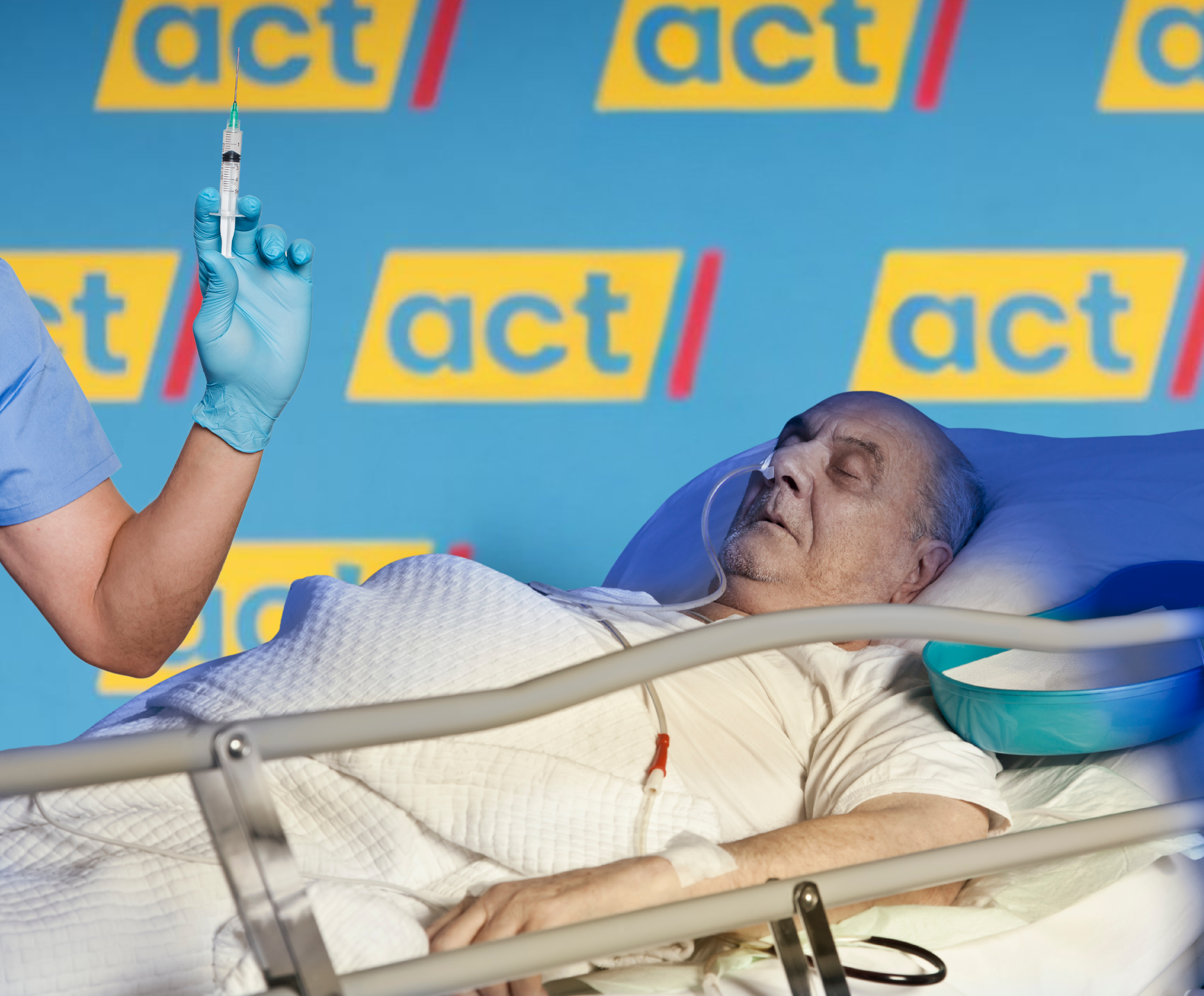
Hundreds of Kiwis were put to death last year by a doctor, yet the ACT Party is calling for more.
With the New Zealand Ministry of Health releasing its Registrar Assisted Dying Annual Report results, it revealed 486 New Zealanders died by euthanasia and assisted suicide for the year April 2025 to March 2026.
That’s 1.29% of all deaths in New Zealand by euthanasia.
Over the past three years there has been a 44% increase in new applications, rising from 807 (2022/23) to 1,164 (2025/26).
Yet, being an election year, the issue was spun into a political position for the ACT Party to promote their Member’s Bill that has been sitting in the ballot box undrawn for months.
MP Todd Stephenson’s Assisted Dying Amendment Bill is positioned to obliterate the feeble “safeguards” currently in place, forcing all healthcare providers to allow euthanasia on their sites, overriding all conscientious objection, and completely breaking the promise on which the legislation was introduced: that healthcare providers would never have to participate in the Act.
The Bill, if passed, would also push over the six-month terminal prognosis (which is the only real determining factor that indicates a patient is probably nearing death) to allow for anyone who will eventually die of any illness to access it.
Mr Seymour states: “Many of those people are forced to continue to suffer intolerably because their terminal illness doesn’t align with the calendar” - as if providing a date for death is a solution to suffering.
This is the same David Seymour who told the NZ Parliament that opponents’ claims that the law would be expanded in the future were a “slippery slope fallacy”.
Of course, this shift is all under the label of “more access to healthcare” and giving people “more autonomy”, yet totally fails to address any lack of good healthcare treatment, palliative care, or support.
What should be concerning is the fact that five complaints were lodged in the last year, including the fact a counsellor raised euthanasia with their patient as a solution (which is illegal); that a doctor failed to complete death report forms and only received a “reminder” from the ministry; and a complainant raising the issue of a total lack of support for bereaved families in relation to assisted dying.
One complainant also had concerns about a person in the process of euthanasia within a facility failing to demonstrate sufficient competence to be eligible. The Registrar reviewed the application and confirmed it was in compliance with the Act.
A red flag should be waving over the continued decline in the number of health practitioners willing to be involved in assisted suicide and euthanasia. The workforce is shrinking as its output grows. The number of practitioners on the Support and Consultation for End of Life Choice (SCENZ) Group list, which connects patients with doctors willing to assess or carry out assisted deaths, fell from 148 in March 2023 to 121 in March 2025), while assisted deaths per listed practitioner rose 81%, from 2.2 to 4.0 a year.
The decrease follows international trends in which practitioners pull out from the practice of killing patients, leaving small numbers to conduct large caseloads. These few practitioners are funded by the Ministry of Health to travel around the country delivering lethal injections to patients they have never met in person before.
This trend also runs over into the psychiatrists on the list who are available for patients to be referred to as a second opinion on their competency. Their numbers fell from 13 to 3 nationwide, with none residing in the Midland or Central regions.
A further worry is that psychiatrists are only checking to see if patients understand the impact of euthanasia (death), not considering why they are choosing it, if they are being coerced, or even if they are suffering from depression.
The ACT Party should at the very least be calling for total reform to match international levels of accountability and reporting, not hiding data behind claims of ‘individual confidentiality’ and failing to track any failings of the system that impact people’s real choices.
It should be advocating for the removal of this legislation out of publicly funded healthcare—which the vast majority of palliative care practitioners oppose—and allow complete autonomy of businesses, organisations such as Hospice NZ, and hospitals (along with their staff) to choose not to offer assisted dying on the grounds of conscientious objection.
It should be calling for proper palliative funding, so that the 1 in 5 who chose euthanasia last year who did not receive palliative care would be guaranteed support through their final days.
True palliative care changes people’s choices. This was demonstrated in the report, which mentioned occasions when a person's request for euthanasia led them to explore alternative care and services, such as palliative care or additional social or wrap-around support. As a result, they withdrew their application completely, demonstrating the absolute need for well-funded, accessible palliative care that truly relieves suffering.
The true act of dignity is calling for access to palliative care until natural death, not death via off-label chemical injection.
The fact the ACT Party is hiding behind the Ministry of Health’s recommended changes (of which David Seymour is the associate minister of health) in their Member’s Bill shows a total lack of transparency as to who is feeding information to the ministry—like that of Dr Jessica Young, a pro euthanasia-campaigner and researcher funded by the Health Research Council, who boasts of having spoken to 180 people impacted by assisted dying, receiving $3 million of competitive funding for research, and being on the SCENZ Group from 2021–2023. (*New Zealand – The Association for the Study of Death and Society)
If the ACT Party gets this Member’s Bill through, you can expect to see a dramatic rise in those using euthanasia. The party claims that over half the people applying for assisted dying last year were denied, and if the law changes, they, along with many others, will flock to the “opportunity” of euthanasia.
But there are many voices raising the alarm against Todd Stephenson’s Bill, including New Zealand’s primary palliative care providers - Hospice NZ and Voice For Life.
New Zealanders need to make it very clear to their MPs and those running for office this election year – they will not vote for anyone standing for expansion and loosening of euthanasia practices in New Zealand.
“Now is the time to make it abundantly clear you will not vote for any candidate running for parliament who would prefer to offer death on demand instead of a commitment of care,” Voice For Life national president Lydia Posthuma says.
For more information on euthanasia and assisted suicide visit www.voiceforlife.org.nz.
Further Registrar Assisted Dying Annual Report results:
Out of 486 the people who died by assisted dying:
460 died by euthanasia
26 died by assisted suicide
Clear ethnic disparity is demonstrated in those accessing euthanasia:
81.1% were European (despite representing 67.8% of population)
4.9% were Maori (of 17.8% of population)
2.49% were Asian (of 17.3% of population)
0.77% were Pacific peoples (of 8.9% of population)
The location in which euthanasia deaths took place over the reported period:
• 69.8% took place at a private residence or another private property
• 19.5% took place in an aged care facility
• 7.2% took place at a hospital
• 3.5% took place in a hospice facility.